Italian Doors I fell in love with in Italy
Neat things I learned about Italian doors & their functional design 🤍
While walking the streets of Rome, Florence, & Venice a few weeks ago, I gravitated toward every door I passed. I wondered about the stories hidden behind each one.
Every door felt monumental in scale, with carved stone surrounds, bronze hardware, & heraldic knockers.
Roman knockers lean heraldic and figural: lions' heads, eagles, masks, a hand holding a ball or ring. The lion is the classic Roman motif, tied to noble heraldry & the apotropaic idea of a guardian beast warding off ill will. Bronze, heavy, hand-cast.
Florence had simpler, elegant doors. Rusticated palazzo stone, rough & monumental, with a restrained ring knocker & a simple detail. The texture quietly does the work.
Florentine doors were made of walnut & chestnut, often iron-banded, studded with big dome-headed nails. The studs were functional: they protected the wood from cart wheels & battering.
My favorite door patterns were in Florence 🤍
I was fascinated by the smaller doors within large doors. A "portone" — a main double door — is huge, sized for carriages. Set into it sits a "portello," a small pedestrian door cut into the big leaf so people could enter without swinging the whole door open. This double-door-plus-wicket is a classic Italian detail I saw everywhere.
Florentine knockers are more restrained and symbolic: rings held in a lion's mouth or hand, sometimes in "ferro" (wrought iron) rather than bronze. The hammer-style "batacchio" is common.
I loved seeing the little wine windows in Florence. They date to the 1500s, built so noble families could sell surplus wine directly to the street, bypassing taxes. They were used again during the 1630 plague — and revived during COVID.
The Venetian portal mixes Byzantine and Gothic styles. Doors sit inside pointed or S-curved (ogee) arches, often with carved stone lobes and tracery at the top. I noticed round-arched portals with rope-twist columns along the same canal.
Venice has water doors: low, green-black, half-hidden by the tide line, with oxidized wrought iron that's bled into the stone for centuries. The whole city ages beautifully in the natural elements.
What I love is how the Old World translates into warm minimalism.
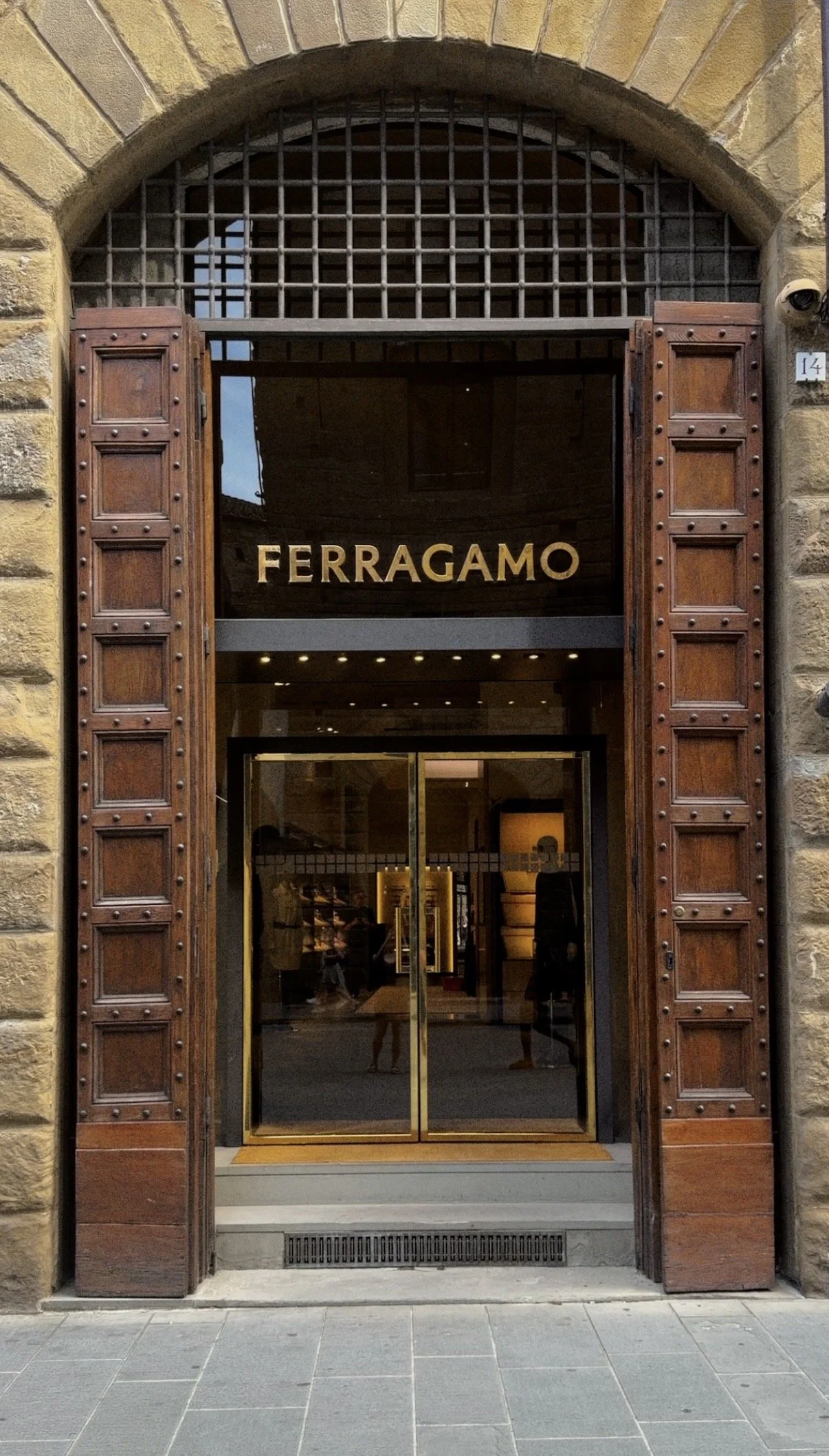
A marble threshold, worn smooth by 2,000 years of foot traffic, sits beneath new glass doors: clean-lined, quietly modern, retrofitted into the original opening of an ancient building.
Neutral warm stones, texture, clean lines, & character in natural materials aging beautifully over time. These are the design details I love to see when I travel.
#warmminimalism #oldworlddesign #sanfranciscodesigner #interiordesign #italytravels